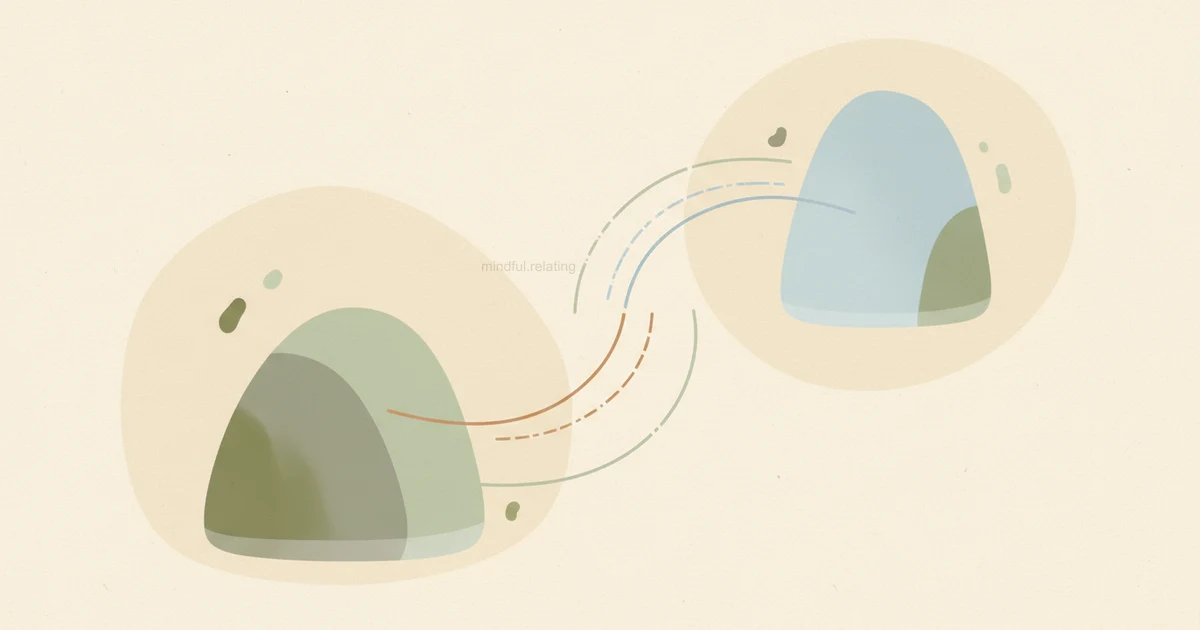
Blame often feels like a tool: point it outward and you might finally be seen or understood. But blame rarely does that. It tends to narrow the conversation into who’s right, who’s wrong, and who must change first.
A mindful approach treats blame as information. Underneath an accusation you’ll usually find hurt, fear, disappointment, or a longing that was never named. When you learn to read blame as a signal, you can shift conflict away from attack and toward repair.
Catch the doorway
Most blame cycles begin small: a tighter tone, a repeated complaint, a correction that lands like a verdict. If you can name the moment the conversation tips, you can interrupt the spiral before defensiveness hardens.
The skill is noticing early signs in yourself and the other person and choosing one simple interruption instead of escalating.
- My voice is getting sharper - can we slow down?
- I’m starting to feel cornered; I need a minute to breathe.
- I want to hear you, but I’m already preparing my response - can we pause?
Separate impact from character
Blame often sounds like a judgment about who someone is: you’re careless, you never care, you always ignore me. Those statements pull the other person into defending their identity instead of understanding the moment.
Shift the focus from character to experience. Name what happened, the emotional impact, and the need underneath. This keeps the conversation specific and actionable.
- When you didn’t text back yesterday, I felt unseen and anxious.
- I’m not saying you don’t care - I’m telling you what that moment felt like for me.
- I need us to check in about plans so I don’t get left worrying.
Practice soft accountability
Accountability doesn’t have to be punitive to be real. Soft accountability is clear and specific about changes you want to see, while leaving room for repair and mutual understanding.
It reduces the need to defend because it asks for a concrete shift rather than condemning the whole person.
- Here’s what I need next time: tell me if your plans change and we’ll adjust together.
- I need you to follow through on X. If you can’t, let me know ahead of time.
- I’ll practice checking in earlier so you don’t feel ambushed. Can you try Y this week?
Repair the pattern
Fixing the surface issue-rescheduling a plan, apologizing-often leaves the deeper loop intact. Pattern repair asks: what started this loop, and how did each of us respond to protect ourselves?
Naming the pattern together makes future conflicts easier to catch and redirect.
- We moved into blame again; can we explore what each of us needed in that moment?
- Next time this starts, let’s agree to say the cue word and take a five-minute break.
- When we calm down, let’s make one small agreement that would prevent this specific fight.
Respond, don’t react
Emotional reactivity narrows options. A calm response widens them. Small practices-pausing, breathing, and checking curiosity-create space for curiosity instead of accusation.
You don’t have to be perfect. The goal is a different direction for the conversation: toward understanding and next steps rather than blame and counterattack.
- I’m going to pause for two breaths so I don’t say something I’ll regret.
- Help me understand: what did you mean when you said that?
- I hear you’re upset. Tell me what you wanted in that moment.
Bringing It Into Daily Life
Breaking the blame cycle is a practice, not a one-time fix. Start with small experiments: notice a doorway, name impact instead of character, ask for soft accountability, and name the pattern when it repeats. Over time those tiny shifts change the emotional direction of your conversations-making room for repair, responsibility, and the kind of safety that keeps a relationship growing.